
Vaulted Ceiling Insulation in Peterborough and the Kawarthas
High performance insulation for vaulted ceilings that need more than basic thermal protection.
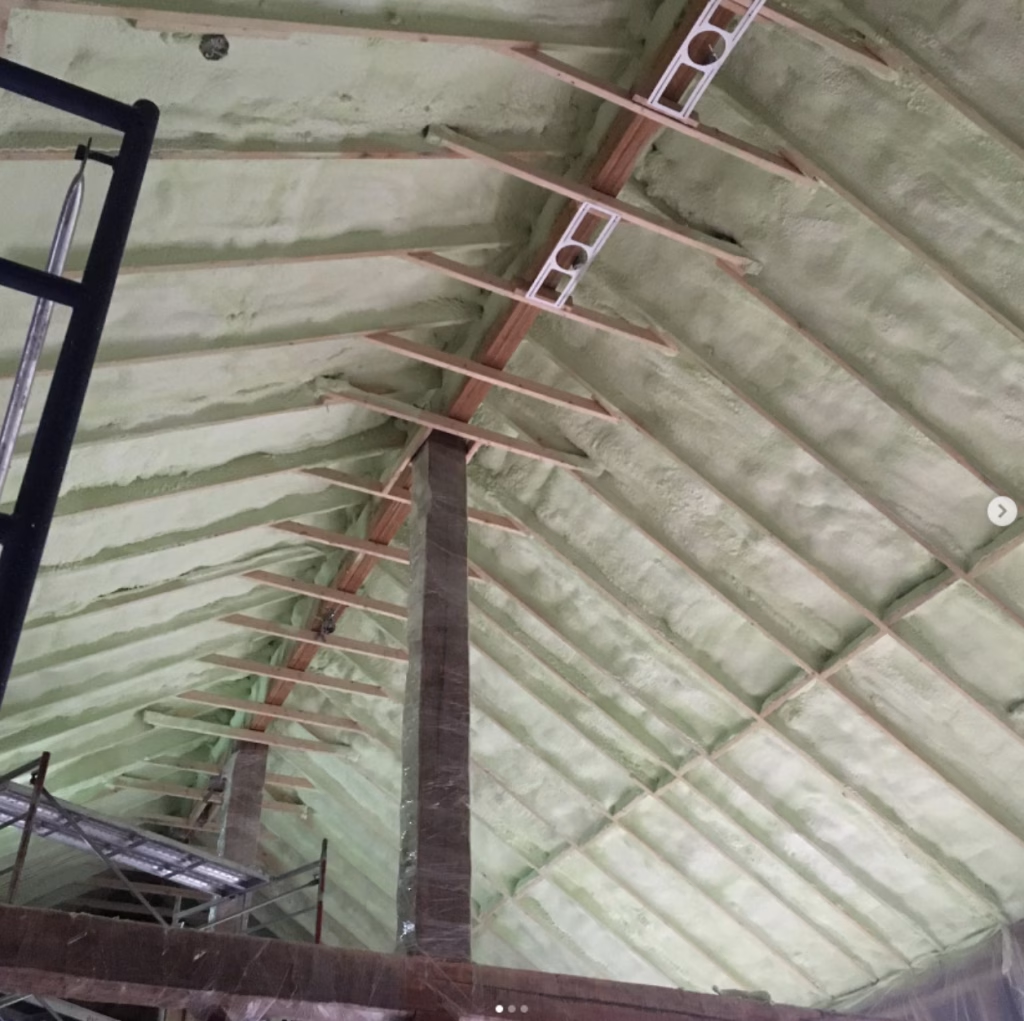
Closed-Cell Spray Foam Insulation for Vaulted Ceilings
Why Vaulted Ceilings Need the Right Insulation Strategy
Vaulted ceilings create volume, light and architectural impact, but they also place higher demands on insulation. Because they sit directly beneath the roofline, the insulation system must manage temperature, air movement, moisture and long term durability within a limited space.
How Closed-Cell Spray Foam Improves Performance
Closed-cell spray foam insulation is well suited to this type of assembly. It provides a high R-value per inch while also helping to reduce uncontrolled air leakage. This supports better thermal performance, improved comfort and a more efficient building envelope.
Vaulted ceiling assemblies can also be vulnerable to condensation, especially in humid climates or areas with significant temperature changes. Closed-cell spray foam offers strong moisture resistance, helping support a more stable roofline assembly over time.
Its dense structure gives it added rigidity compared to many traditional insulation materials. In vaulted ceilings, where cavity depth may be limited and performance requirements are high, this combination of insulation value, air control and durability makes it a practical solution.
Installation Considerations for Vaulted Ceilings
The performance of closed-cell spray foam depends on proper installation. Vaulted ceilings require careful review of the roof assembly, application depth, ventilation approach, substrate conditions and moisture management strategy.
When installed correctly, closed-cell spray foam can help create a more efficient, controlled and durable vaulted ceiling assembly.
Vaulted Ceiling Insulation FAQs
Yes. Closed-cell spray foam insulation is a strong option for vaulted ceilings because it provides thermal insulation, air sealing and moisture resistance in one system.
Vaulted ceilings sit directly beneath the roofline, which makes them more exposed to heat loss, air leakage and condensation risk. They need an insulation strategy that manages both temperature and moisture within a limited cavity space.
Yes. Closed-cell spray foam helps resist moisture movement when installed correctly as part of the roof assembly. This can be especially useful in areas like Peterborough and the Kawarthas, where seasonal temperature changes can affect building performance.
The required R-value for a vaulted ceiling depends on the local building code, roof assembly, climate zone and available cavity depth. Closed-cell spray foam is often used in vaulted ceilings because it provides a high R-value per inch, making it useful where space is limited. Find out more info here.
Before installation, the roof assembly should be reviewed for ventilation, substrate condition, application depth and moisture control. Proper installation is what allows closed-cell spray foam to perform as intended.