
Floor Insulation in Peterborough and Kawartha Lakes
A stronger way to insulate floors against drafts, heat loss, moisture and movement.
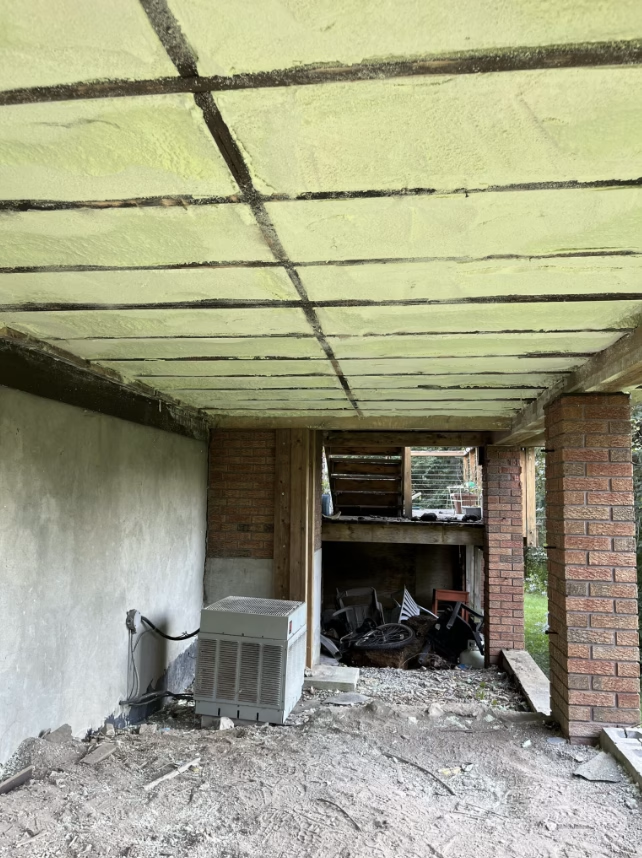
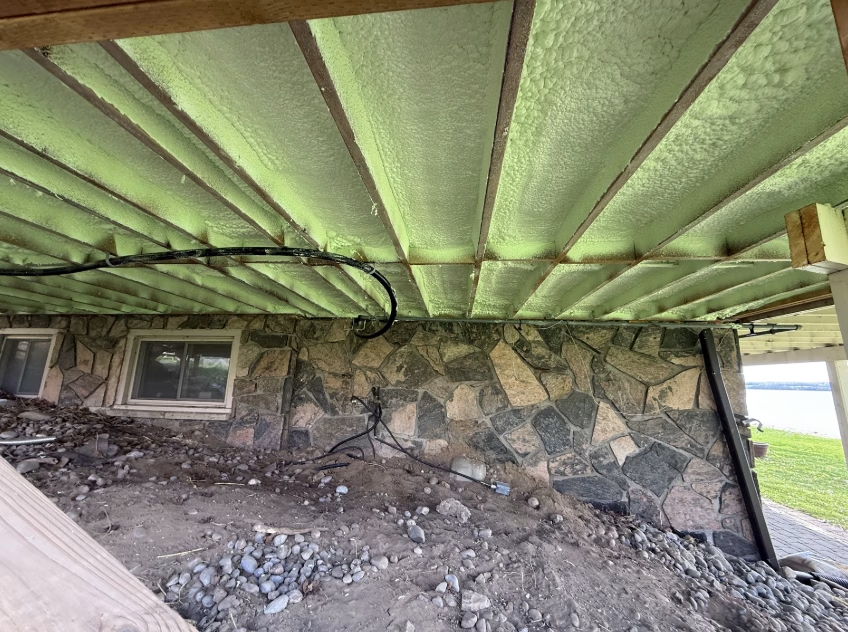
The Only Floor Insulation That Can Fight Gravity and Win.
Spray foam insulation is one of the best floor insulation options because it adheres directly to the floor structure, seals air leaks and resists sagging over time.
Floors work harder than most people realize. They carry weight, respond to movement and face temperature changes from below. That means the insulation underneath them has to do more than fill space. It has to stay in place.
Why Gravity Matters in Floor Insulation
Traditional floor insulation, such as batt or blown-in insulation, can shift or sag over time. When that happens, gaps form and performance drops.
Spray foam solves this problem by bonding directly to the underside of the floor. As it expands, it fills seams, small gaps and hard to reach areas, creating a continuous insulation and air-sealing layer.
Key Benefits of Spray Foam Floor Insulation
- Adheres directly to the floor structure
- Helps reduce drafts and air leakage
- Fills gaps and irregular spaces
- Resists sagging and settling
- Supports long-term energy efficiency
- Helps improve indoor comfort
Why Closed-Cell Spray Foam Works Well Under Floors
Closed-cell spray foam cures into a dense, rigid layer that stays connected to the structure. For floors, that matters.
Instead of relying on friction or placement to hold its position, spray foam becomes part of the assembly. It insulates, seals and supports consistent performance over time.
A Stronger Approach to Floor Insulation
Floor insulation fails when it moves.
Spray foam is designed to stay put. For homeowners, that means fewer weak spots, better comfort and insulation that continues doing its job long after installation.
Floor Insulation for Cottage Conversions
Closed-cell spray foam insulation is one of the strongest options for insulating the floor of a raised cottage during a 3 season to 4 season conversion.
Raised cottages are exposed from underneath, which makes the floor assembly vulnerable to cold air, drafts, moisture and pest entry points. If the insulation does not seal properly or hold its position, the space above becomes harder to heat and less comfortable in colder months.
Why Closed-Cell Spray Foam Works
Closed-cell spray foam bonds directly to the underside of the floor and expands into gaps, seams and irregular spaces. This creates a continuous insulation and air-sealing layer that helps reduce heat loss from below.
Its dense structure also helps manage moisture exposure, which is especially important in raised cottage applications.
Key Benefits for Cottage Conversions
- Helps reduce heat loss through the floor
- Seals drafts and air leaks from below
- Supports better cold-weather comfort
- Resists moisture in exposed floor systems
- Helps reduce pest entry points
- Supports long-term energy performance
Built for 4 Season Performance
A 4-season cottage needs insulation that can handle colder temperatures, changing conditions and regular use.
Closed-cell spray foam strengthens the floor as part of the building envelope. It insulates, air seals, and helps protect the space from the conditions below.
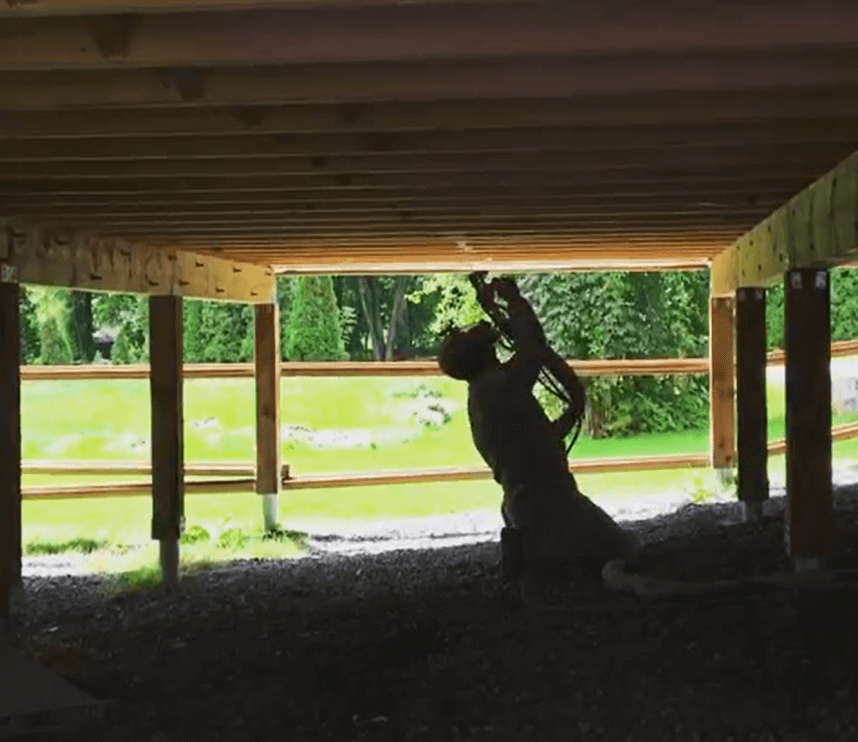
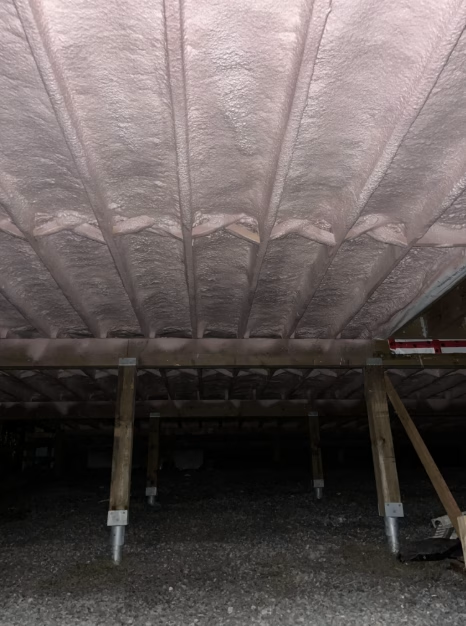
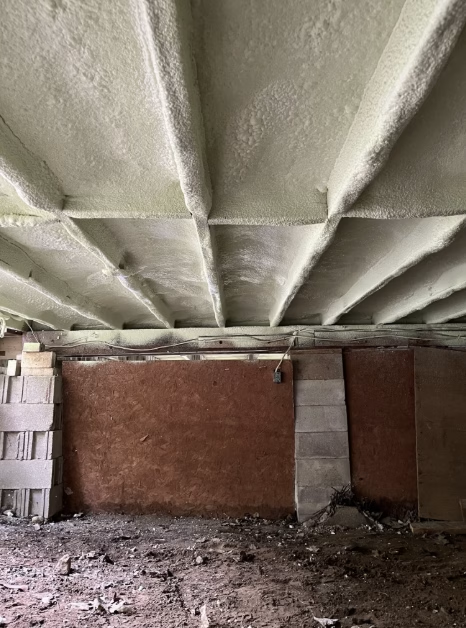
Better Insulation and Stronger Floors
Spray foam insulation can help reduce floor creaking by limiting movement in the floor assembly.
Creaking often happens when the subfloor, joists, or fasteners shift as people walk across the floor. Small gaps in the assembly can create movement and movement creates noise.
How Spray Foam Helps
When spray foam is applied under the floor, it bonds to the subfloor and surrounding framing. As it expands, it fills gaps and helps create a more stable connection within the floor system.
That added rigidity can help reduce the movement that leads to creaks and squeaks.
Added Sound Control
Spray foam also helps reduce air movement and can soften some sound transfer through the floor. It is not a complete soundproofing system, but it can contribute to a quieter, more comfortable space.
A Stronger Floor Assembly
Spray foam does more than insulate. It helps seal, stabilize and support the floor system.
For homeowners, that means better thermal performance, fewer drafts and a floor assembly built to feel more solid under everyday use.
Flooring Insulation FAQs
Closed-cell spray foam is one of the best insulation options for floors because it adheres directly to the floor structure, seals air leaks and resists sagging over time.
Yes. Closed-cell spray foam is a strong choice for raised cottage floors in the Kawarthas. This is especially true when converting from 3 season to 4 season use. It helps reduce heat loss, seal drafts, manage moisture exposure and protect the floor assembly from below. Check out our article about spray foam insulation for cottages for more information.
Yes. Spray foam can help reduce floor creaking when the creaking is caused by small gaps and/or movement in the floor assembly. Spray foam bonds to the subfloor and framing, which can create a more stable floor system.
Closed-cell spray foam is designed to stay in place. Once applied, it bonds directly to the floor structure and cures into a dense, rigid layer that resists sagging, settling and shifting.
Spray foam works well under floors because it expands into gaps, seams and hard to reach areas. It creates a continuous insulation and air-sealing layer that helps reduce drafts, heat loss and air leakage from below.